

I intend to post my journey into becoming a bowyer, one who designs and creates bows for the sport of archery. I want to document my successes and failures in hopes of helping others wanting to get into the craft and for my own joy as I see the progression of my skills. Main tips I’ve learned. Use a backing. Shinto Rasps are the best tool. Tillering requires attention, don’t rush or do it when tired. Bamboo backing requires added attention when flattening, especially towards the middle of the backing and out towards the limb tips. Thick handles and risers are the way to go. Go slow when using the band saw. Using a giant T square for the layout helps get good lines for your limbs.
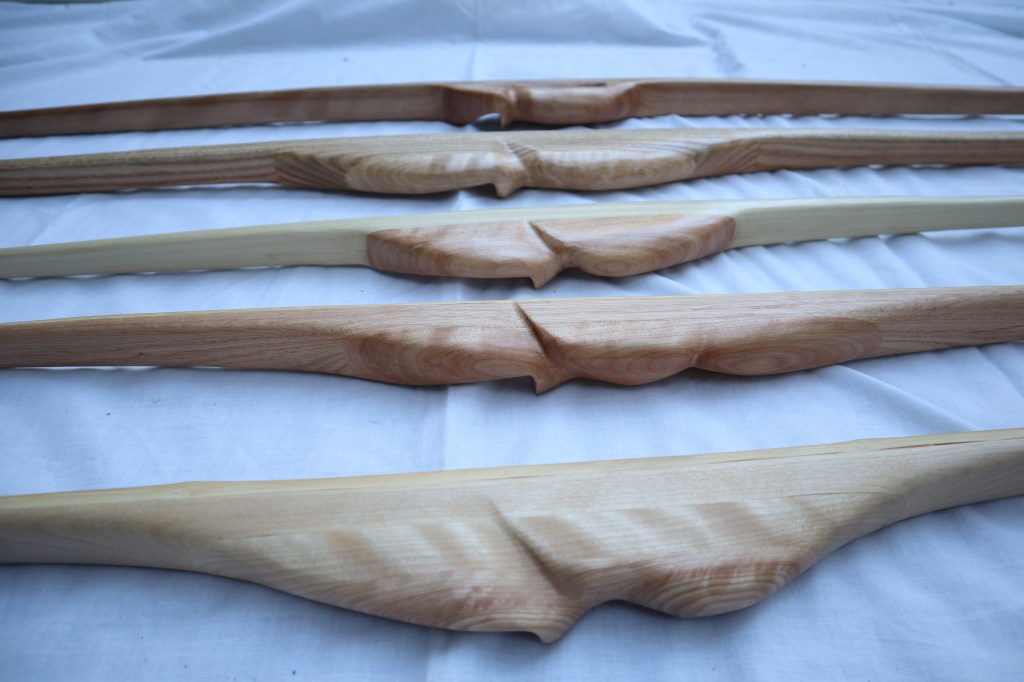
- Birch Bow – unbacked – broken in tiller
- Red Oak Bow – unbacked – broken in tiller
- Maple Bow – unbacked – broken in tiller
- Birch Bow – Fiberglass Backing – Birch Handle – Tillered to 30″ no limb set – approximately 40lb draw weight at 30″ – learned the importance of a backing. Very fun bow to shoot. Hasn’t taken any set and seems to be the best bow overall I’ve made. The grain on the bow is very tight and runs the length of the limb. I can see over 10 growth rings at the end of the limb.
- Red Oak – No backing – went with a longer design overall including longer limbs and longer handle and fades. Tillered to 30″ – seemed slower to shoot even with higher poundage. Eventually developed a crack on the back of the bow. Very thick growth rings, but runs tips to tip, I think the tight grain would’ve prevented the back from lifting a splinter.
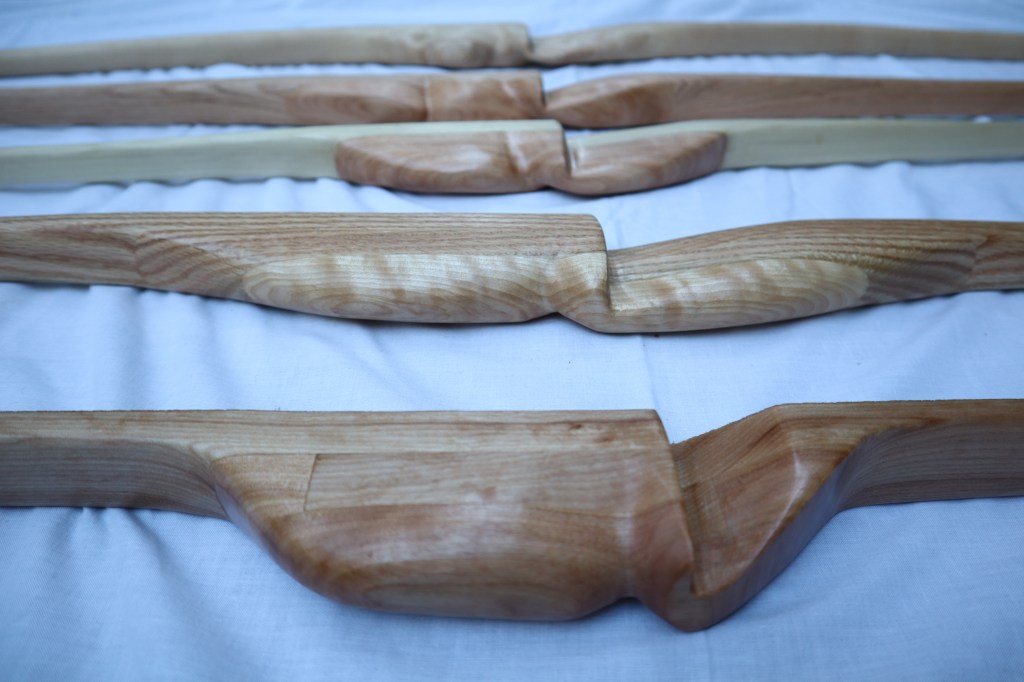
- Birch Bow – Bamboo Backing – I really learned that bow backings are of high importance, they balance the tension forces on the back of the bow, and when the belly wood is of decent grain. I made the limb tips too thin and was tired when tillering and ended up shaving wood on the hinge instead of either side of it creating a overly thin spot on one of the limbs.
- Red Oak Bow – Bamboo Backing – The board had hidden checking half way through the bow, this gave me a lack of confidence in shooting it regularly, played with a longer and thinner handle, learned I enjoy the triple thickness handles the best (2.5″ depth from back to belly)
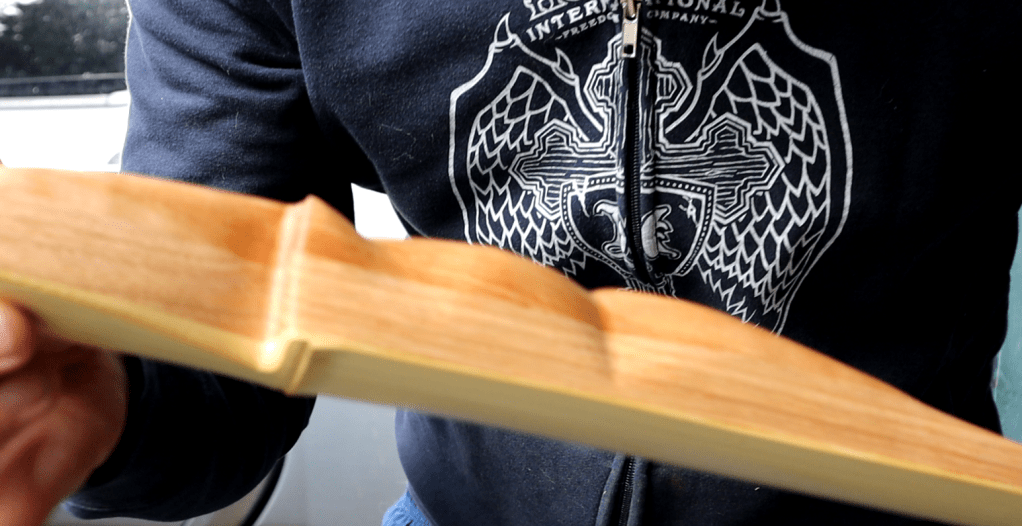
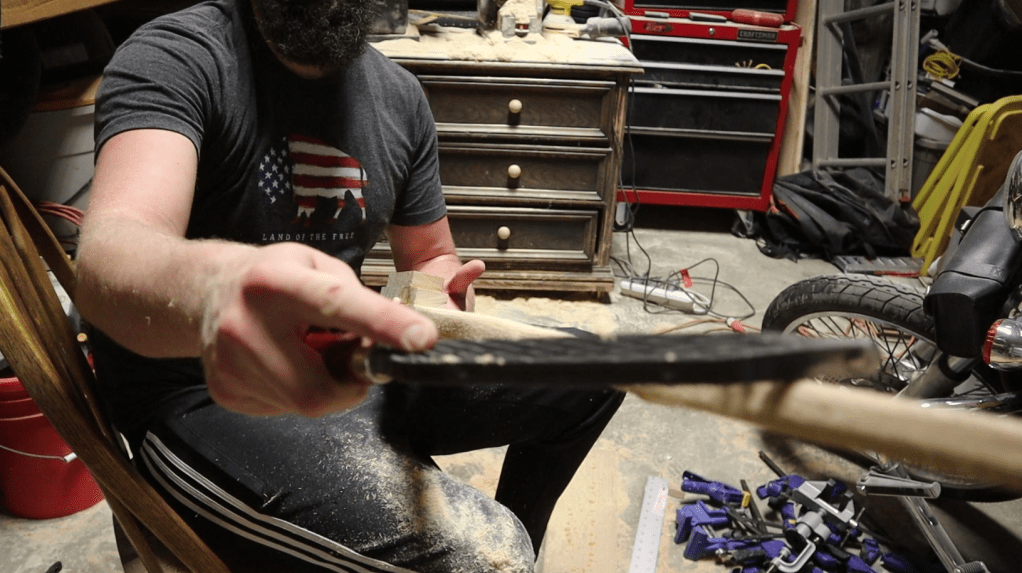
- Birch Bow – Bamboo Backing – this is the bow from my board bow how to series on my YouTube Channel – How to Birch Bow with Bamboo Backing 8 part series. I love the size and design of the handle. It shot really fast when I first made it. As I continued to shoot it and draw it out to 30″ the bow took increasing levels of set. The bamboo backing was too thick. The first piece of bamboo backing developed a crack so I had to redo it, and I guess I rushed the flattening and thinning process and ended up with a bamboo piece that was too thick mid limb down to the tip. There were also some slight gaps between the back of the birch bow and the bambo, I believe again this is from me rushing the thinning of the bamboo and allowing the bamboo to rest against the end of the belt sander for a fraction of a second towards the end of the sanding motion.
My first time shooting archery was as a young child and I can’t remember exactly what bow I used, but I can remember the invigorating feeling the first time I hit the target.
Leap forward to graduating college and I get into firearms target shooting and that happy feeling of hitting what I’m aiming at returns, whenever I made the time to go shooting. However, firearms took quite a bit of effort. Finding a shooting range, packing lots of gear, it’s loud and even possibly dangerous when heading out to a secluded public shooting area with random Joe’s practicing poor safety.
Jump ahead again to me turning 30, I had gone out for a friend’s birthday the night before, got bit in the face by a bulldog and spent a few hours getting stitches in my face, not exactly in a zen state, but in 2017 I meet up with a guy wanting to sell his bow setup due to a shoulder injury, we met me in a field to let me try the bow and he showed me the basics. How to hold the bow, wear a release, look through the sights etc. Hands it to me, I hit the target, a huge childlike smile crosses my lips, reminding me of the stitches I had gotten hours earlier, I brush off the pain. I knock another arrow and miss the foam target completely, the arrow traveling 300 feet per second never to be seen again, but I was hooked. I purchase the lightly used #65 Bear compound bow, release, and some arrows for around I think $250.
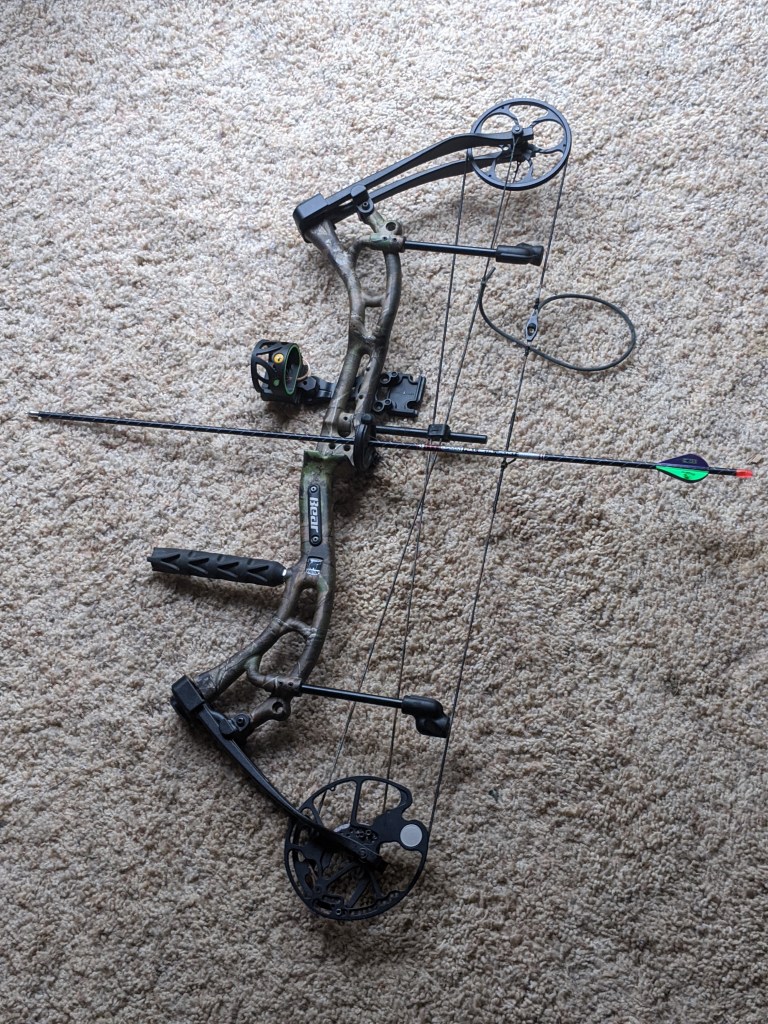

The shaft is aluminum and carbon fiber to give you consistent flight at distance with a high impact weight. Highly Recommend. It is fine to practice with cheap arrows when you are starting out, but when you want to get good performance at far distances, spend the money and have a good shop you trust pair you up with these bad boys. I think I paid about $15 per arrow, but they are worth it!
I set up a bag target in my house and took to practicing somewhat regularly and find myself getting pretty good, so much so I decided to try my luck at bow hunting the next season. Never loosed am arrow that season, but the peaceful experience shooting archery compared to firearms and then the connection to nature walking slowly through the National Forest with a bow in hand and a deer tag in my pocket, I can only describe as pure sweat and joy. Thanks to the JRE podcast for lighting my archery and bowhunting fire!
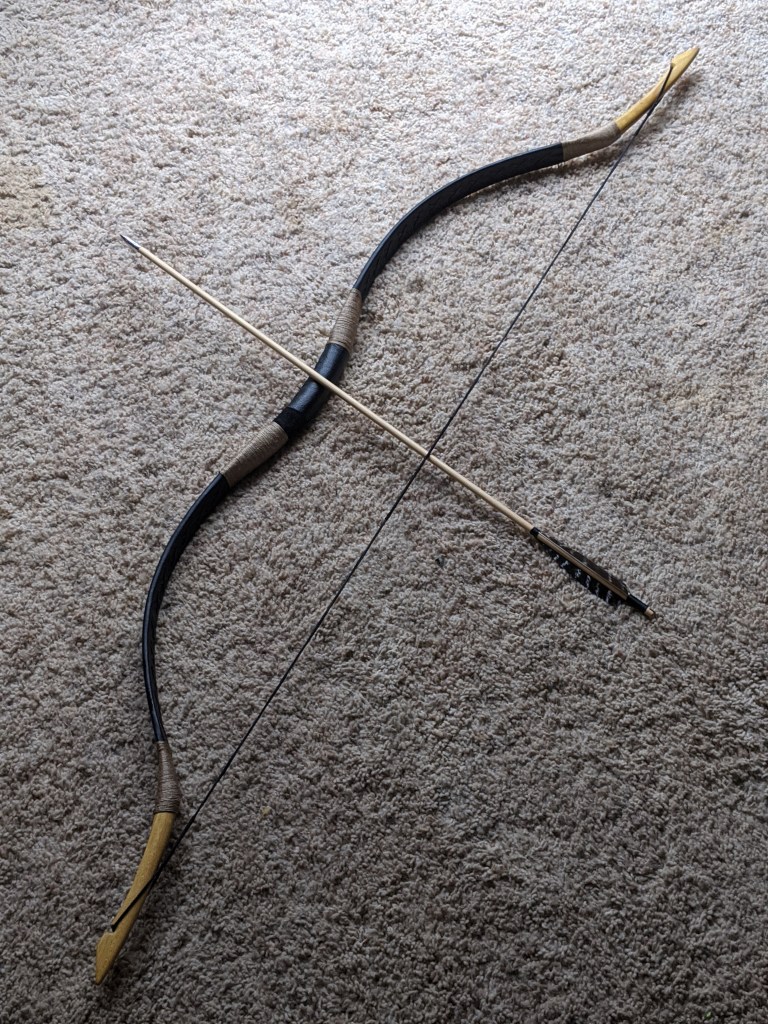
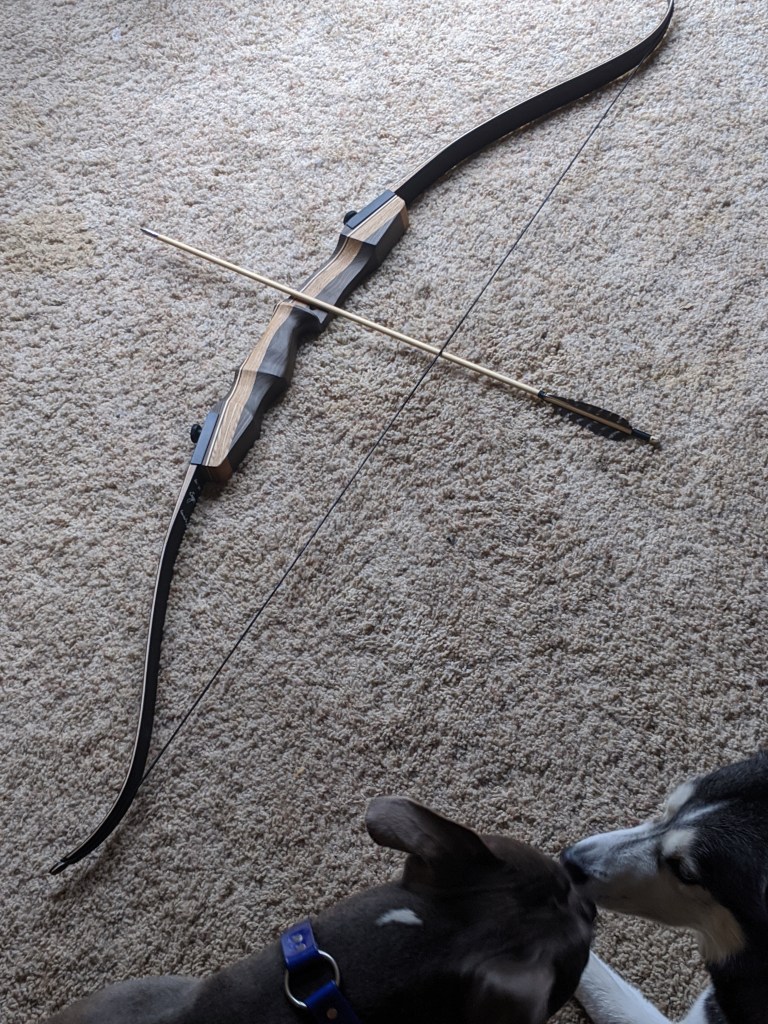
Now on the eve of 2020, I decide that I’d like to get into traditional archery, I decide to buy myself some Christmas presents in the form of a Samick SAGE #35 and a Mongolian horse bow replica, again #35 draw weight. I got a glove, tab, thumb guard, some more arrows all with the idea I want to be able to practice for hours on my property without fatigue. Liked the SAGE so much I ended up buying another one in 55#, Amazon Prime had a seller letting them go for under $80, too good of a deal to resist!
This winter I planted Moso bamboo, Maple, Osage orange, and even Pacific Yew with the thought I’m going to become a Bowyer, one who creates bows, and be able to one day harvest the appropriate trees from my own 33 Acre forest property and hunt using my a weapon forged by my own hands.
 www.OffGridVenture.com